
Did you know that nearly 82% of small business failures are due to bad cash flow management? Many entrepreneurs struggle because they don’t know the difference between keeping records and analyzing finances. It’s crucial for keeping finances healthy in the United States.
Understanding these roles helps you decide what professional services your business needs. Think of these functions as the engine and the navigation system of your company. One keeps track of your journey, while the other guides you to the best path.
Knowing how these tasks work together gives you a clear view of your financial health. Mastering this balance helps you manage your company’s growth and avoid common mistakes. Let’s see how you can use both to secure your business’s future.
Key Takeaways
- Poor financial management is a leading cause of small business failure.
- Daily data entry and strategic financial analysis serve different purposes.
- Both functions are necessary to maintain a complete view of your fiscal health.
- Identifying your specific needs helps you choose the right professional support.
- Proper financial organization is the foundation for sustainable company growth.
Understanding Bookkeeping vs Accounting: What’s the Difference?
If you’re wondering bookkeeping vs accounting: what’s the difference?, you’re not alone. Many people mix up these terms, but they’re key parts of financial management. Knowing their roles is essential for your small business finances.
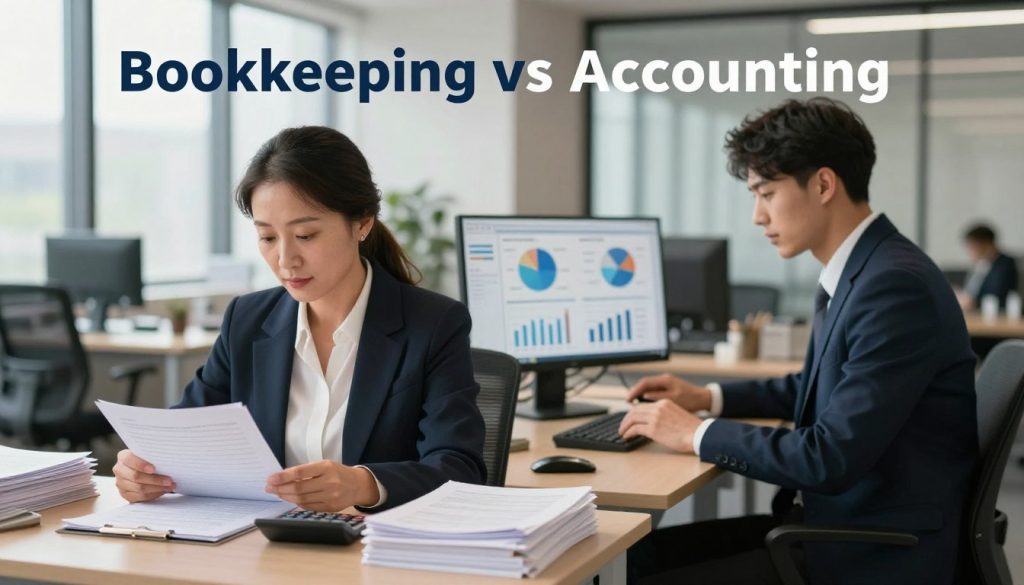
Defining the Role of Bookkeeping in Your Business
Bookkeeping is about recording every financial deal your business makes. It’s the base of your financial system. Without it, you can’t see where your money goes or how much you make each day.
A bookkeeper deals with the day-to-day stuff. They log receipts, process invoices, and check if your bank statements match your records. This keeps your books in order and ready for audits.
Defining the Role of Accounting in Your Business
Bookkeeping gives you the data, but accounting turns it into useful information for growth. It looks at the big picture to help you make smart choices. Accountants use the data to make reports, predict future trends, and handle taxes.
“Accounting is the language of business, and it is the primary tool used to communicate the financial health of an organization to its stakeholders.”
The table below shows the main differences between these two important roles:
| Feature | Bookkeeping | Accounting |
|---|---|---|
| Primary Focus | Recording transactions | Analyzing data |
| Scope | Day-to-day operations | Strategic planning |
| Outcome | Financial records | Financial insights |
| Complexity | Routine and systematic | Interpretive and complex |
By understanding these roles, you can figure out what your company needs. Whether it’s someone for daily cash management or a strategist for the future, knowing these definitions is key to financial clarity.
Key Responsibilities of a Bookkeeper
Mastering the key tasks of a bookkeeper can transform your financial workflow. Keeping records organized ensures your company is always ready for audits. Consistency is key to managing your small business finances well.
Recording Daily Financial Transactions
Every dollar in and out of your business needs to be tracked accurately. Modern accounting software simplifies this by automating data entry. Logging every sale and expense daily gives you a clear financial picture.
Managing Accounts Payable and Receivable
Good cash flow management starts with handling payments well. Paying vendors on time keeps relationships strong, while getting payments from clients quickly is essential. Bookkeeping services help you meet these deadlines without stress.
Staying organized avoids late fees and missed revenue. Business bookkeeping is about more than just data entry; it’s about protecting your profits. Watching your accounts receivable keeps your cash flow healthy.
Reconciling Bank Statements for Accuracy
Reconciliation checks if your records match your bank activity. This step in business bookkeeping catches errors or fraud early. By comparing your logs with bank statements, you ensure your data is completely reliable.
Using accounting software for reconciliation saves time each month. This habit prevents errors and gives you peace of mind for your small business finances. These daily tasks are the base of a stable and growing business.
Strategic Benefits of Professional Accounting
Bookkeeping looks at the past, but accounting shapes the future. It goes beyond just entering numbers. You get strategic insights that help you grow your business.
This shift lets you see your business as a long-term success story. Experts turn numbers into a clear plan for your company’s future.
Analyzing Financial Data for Growth
Deep financial analysis is key for growing your business. By looking at your numbers, you find out what’s most valuable.
This helps you use your resources better. Knowing your profit margins and cash flow lets you make data-driven decisions for steady growth.
Ensuring Tax Compliance and Planning
Keeping up with taxes is more than just filing on time. Using accounting software helps you keep accurate records and find tax savings.
Good tax planning avoids big surprises when it’s time to file. With the right tools, you stay compliant and keep more money in your business.
Interpreting Financial Statements for Decision Making
Your financial statements show how healthy your business is. Professional financial reporting helps you understand these documents deeply.
Good financial management lets you adapt quickly to market changes. By mastering these skills, you turn your accounting into a key to success and stability.
Conclusion
Understanding the difference between bookkeeping and accounting is key to running your business well. You now know how to tell apart daily tasks from big financial plans.
Bookkeeping lays the solid base your business needs to run smoothly. Accounting turns those numbers into useful insights that help your business grow and stay stable.
Look at your current processes to see where you might need help. You could hire someone or work with a service like QuickBooks or Xero. Your choice affects your business’s success.
Make sure you focus on both bookkeeping and accounting. This keeps your records right and your tax planning on track. It also helps protect your assets and prepares you for growth.
Take time to check your financial workflows today. Finding where your system is weak is the first step to reaching your business goals. Talk to a certified expert to improve your financial management strategy now.