Blog

  • Understanding Property Appraisals Before Buying a Home

    Understanding Property Appraisals Before Buying a Home

    Did you know nearly 10% of real estate deals fall apart because the final value doesn’t match the agreed price? This surprise often hits new buyers hard, causing financial stress at a time meant to be joyful.

    This home buying guide aims to help you tackle these financial challenges head-on. By understanding how experts evaluate properties, you can safeguard your investment right from the start.

    We’ll prepare you for success by showing how these evaluations impact your mortgage and offer strategy. Knowing these details keeps you in charge of your financial future.

    Key Takeaways

    • Valuations are key to getting your mortgage approved.
    • A low assessment can lead to a big gap in your financing.
    • Smart offers can help you avoid risks from market changes.
    • Professional assessments give an unbiased look at market value.
    • Knowing the facts is your strongest defense for your investment.

    The Fundamentals of Understanding Property Appraisals Before Buying a Home

    Understanding property appraisals before buying a home is key to protecting your investment. The excitement of finding a new home is great, but the valuation phase is a safety net for you and your lender. Knowing these basics helps you navigate the underwriting process with confidence and clarity.

    A cozy and inviting living room with a large wooden table at the center, covered with property appraisal documents and a calculator. A professional, middle-aged woman in a smart business suit is reviewing the papers intently, holding a pen poised to take notes. She is surrounded by warm, natural light streaming through a nearby window, casting gentle shadows across the room. In the background, a bookshelf filled with books about real estate and finance, and a few indoor plants add to the ambiance. The walls are painted in soft neutral tones, creating a calm and focused atmosphere. The camera angle is slightly elevated for a clear view of the appraisal documents and the woman’s engaged expression, emphasizing the importance of understanding property appraisals before buying a home.

    Why Lenders Require a Professional Appraisal

    Lenders must ensure the money they lend is backed by the property’s value. If you default, they need to know the home can be sold to get their money back. This is why the property appraisal process is a must for most financed home sales in the U.S.

    Without an appraisal, lenders risk lending too much. The appraisal gives an unbiased view, keeping the market stable. It also ensures the loan-to-value ratio is safe for the lender.

    The Role and Qualifications of a Licensed Appraiser

    An appraiser is a neutral third party with no interest in the sale’s outcome. They must meet strict appraiser qualifications from state and federal rules. These experts evaluate homes based on data, not personal opinion.

    Appraisers must meet several standards:

    • Complete extensive state-certified education programs.
    • Gain thousands of hours of supervised field experience.
    • Follow the Uniform Standards of Professional Appraisal Practice (USPAP).
    • Keep up with market trends through regular continuing education.

    Distinguishing Between Market Value and Purchase Price

    One key real estate appraisal tip is understanding the difference between the agreed price and the property’s value. The purchase price is what you and the seller agreed on. But the market value is the appraiser’s objective estimate based on similar home sales.

    If the appraisal is lower than your offer, you face a gap. You might need to pay more, negotiate a lower price, or walk away. Understanding this difference early helps you prepare for any challenges ahead.

    Key Factors That Influence Your Appraisal Report

    When you’re ready to buy a home, knowing what affects your appraisal report is key. Understanding these appraisal value factors helps you know what to expect. A detailed appraisal report overview shows how different property features affect the price.

    Physical Condition and Structural Integrity

    The first thing an appraiser checks is the home’s condition. They look for wear and tear that could lower the property’s value over time.

    Assessing Major Systems Like HVAC and Plumbing

    Appraisers check if systems like HVAC and plumbing work well and are up to date. Well-maintained systems show the home has been well cared for. Outdated or failing systems can lower the value.

    The Impact of Recent Renovations and Upgrades

    Good renovations can really increase your home’s value. But, the appraiser looks at if these upgrades were done right. Quality is more important than quantity when it comes to adding value through remodeling.

    Location and Neighborhood Comparables

    A home’s surroundings greatly affect its value. Appraisers look at the neighborhood to set a fair price.

    How Nearby Sales Data Shapes Your Home Value

    The appraiser looks at recent sales of similar homes nearby. This helps set a baseline for what buyers are willing to pay. Local market trends are a big factor in the final price.

    The Influence of Local Amenities and School Districts

    Being close to parks, shopping, and good schools can make a home more appealing. These factors can increase demand and value. Desirable locations usually mean a higher price.

    Common Red Flags That Lower Appraisal Values

    A simple appraisal checklist can help spot issues early. Being proactive can help fix problems before they become big problems.

    Addressing Deferred Maintenance Issues

    Signs of neglect, like peeling paint or broken windows, are red flags. They might indicate hidden structural problems. Here are things to check:

    • Look for signs of water damage or leaks.
    • Check the roof for missing shingles or sagging areas.
    • Make sure all electrical outlets are grounded and work.

    Navigating Safety and Building Code Violations

    Safety is a top concern for lenders. Major building code violations, like unpermitted additions, are serious. Safety compliance is essential for most loans. Finding these issues early helps avoid delays.

    Conclusion

    Mastering the details of your property purchase protects your financial future. You now have the tools to check home conditions and understand complex reports easily.

    Knowing the value of home appraisals is key to avoiding overpaying for a house. This step is a safety net for your mortgage lender and your wallet.

    See the appraisal report as a guide for your negotiation. When you get the data, you can avoid bad deals or ask for repairs.

    Home appraisals are essential for every successful real estate deal in the U.S. Use this knowledge to confidently move through the market.

    Your journey to becoming a smart homeowner begins with these informed decisions. Talk to your real estate agent or loan officer at places like Quicken Loans or Wells Fargo to plan your next steps today.


    FAQ

    Why is understanding property appraisals before buying a home so critical for my mortgage approval?

    When you apply for a loan, lenders check if the property is worth the debt. Knowing about property appraisals helps you see if the appraisal is lower than your offer. This could mean you need to pay more in cash or talk to the seller to get your loan.

    What exactly happens during the professional property appraisal process?

    A licensed professional inspects the home to check its condition and features. They look at recent sales of similar homes to estimate the home’s value. This ensures you don’t overpay in a competitive market.

    What are the standard appraiser qualifications I should look for?

    Look for appraisers who are state-licensed or certified and follow USPAP. Many top professionals have designations from the Appraisal Institute. These qualifications mean the appraiser is trained and ethical, giving you an accurate valuation.

    Can you provide some real estate appraisal tips for first-time buyers?

    Stay informed about local market trends in your area. Before the appraiser comes, list any major upgrades the seller has made. These can help increase the home’s value.

    What are the most influential appraisal value factors that determine a home’s worth?

    The home’s size, number of bedrooms and bathrooms, and structure are key. Also, the quality of local schools and amenities like parks or shopping centers matter a lot.

    How can I make sense of the appraisal report overview provided by my lender?

    Your report will be on a standard form, like the Uniform Residential Appraisal Report. It compares your home to nearby sales. Pay attention to the “Comments” section for the appraiser’s reasoning.

    Is there an appraisal checklist I should use when touring homes?

    Yes. Use a checklist to look for water damage, test systems, and check for safety issues. This can help you spot problems that might affect the lender’s decision.

    Why does a home buying guide emphasize the importance of home appraisals so much?

    Home buying guides stress the importance of appraisals because they protect your financial investment. An appraisal ensures the home’s value is backed by data, preventing you from buying into a bad deal.

    What is the difference between the market value and the purchase price?

    The purchase price is what you and the seller agree on, often influenced by emotions. The market value is a data-driven estimate of what the home is worth. Understanding this helps you deal with the difference between these two numbers.
  • How Small Businesses Can Organize Financial Records and Save Time

    How Small Businesses Can Organize Financial Records and Save Time

    Did you know nearly 40% of entrepreneurs fail because they don’t understand their cash flow? Many owners see accounting as an afterthought. This mistake often leads to costly tax penalties and missed growth chances.

    Learning how small businesses can organize financial records is key to success. By starting strong, you avoid common problems that waste your time and money.

    By focusing on these habits, you gain hours each week. You won’t have to search for lost receipts or deal with messy spreadsheets. Finding how small businesses can organize financial records well lets you focus on growing your brand.

    Key Takeaways

    • Proper accounting prevents unexpected tax complications and penalties.
    • Orderly systems provide a clear picture of your cash flow health.
    • Establishing routines early saves valuable time during busy seasons.
    • Digital tools help automate tedious data entry tasks for accuracy.
    • Consistent tracking builds a foundation for sustainable company growth.

    Essential Strategies for How Small Businesses Can Organize Financial Records

    A cozy small business office scene filled with organized financial records. In the foreground, a wooden desk with a laptop, neatly stacked colorful folders, and an open ledger showcasing clear financial data. In the middle ground, a small bookshelf filled with financial books, a potted plant adding a touch of greenery, and a wall calendar visible. A professional woman in modest business attire sits at the desk, reviewing documents with a focused expression. The background features a bright window allowing natural light to fill the room, casting soft shadows. The atmosphere is calm and productive, emphasizing efficiency and organization in small business finance. Use soft, warm lighting to create an inviting and motivating workspace.

    To get clear on your business finances, you need to organize and keep records well. Starting with the right systems early helps build a strong foundation for growth. Good financial organization is not just about following rules; it helps you make better decisions.

    Separate Business and Personal Finances

    It’s key to keep your business and personal money separate. Mixing them makes it hard to see your true profits. By using a dedicated business bank account and a separate credit card, you make financial record keeping for small businesses easier.

    This step also protects you legally and makes tax time less stressful. With clear labels on business transactions, you avoid the trouble of finding tax deductions in personal receipts. Consistency is key to keep this separation all year.

    Implement Cloud-Based Accounting Software

    Today’s tech offers great tools to make your work easier. Moving to the cloud lets you access your money info from anywhere. QuickBooks or Xero give you real-time visibility into your money, which is vital for growth.

    These tools save you hours by automating tasks. By linking your bank feeds to your software, your records stay accurate and current. This move is essential for modern small business finance.

    Establish a Consistent Weekly Bookkeeping Routine

    Many wait until the month ends to update their books. This leads to a big backlog that’s hard to manage and often has errors. Instead, set aside one hour each week to check your income and expenses.

    This habit keeps your finances organized and stress-free. You’ll spot mistakes early and always know where your money is. The table below shows why a structured approach beats disorganized methods.

    Feature Manual Tracking Automated Routine
    Data Accuracy High risk of error High precision
    Time Investment Several hours monthly One hour weekly
    Accessibility Physical files only Anywhere, anytime
    Tax Readiness Requires frantic sorting Always prepared

    Best Practices for Efficient Financial Record Management

    Managing your financial data well is key for a successful small business. Using modern tools helps you ditch old filing systems for a digital workflow. This change is vital for organizing financial documents and saving time every month.

    Digitize Paper Receipts and Invoices

    Begin by scanning your paper receipts and invoices as soon as you get them. Mobile apps or scanners let you upload these to cloud storage. This keeps your records safe and easy to find.

    Categorize Expenses for Tax Readiness

    Labeling your spending correctly is a top small business bookkeeping tip. Categorizing expenses as you go helps avoid last-minute tax prep. It also makes it easier to spot deductible costs and keep your profits clear.

    Automate Recurring Payments and Invoicing

    Automation is a game-changer for growing businesses. Setting up recurring invoices keeps your cash flow steady without manual effort. It frees up time from tedious tasks.

    Benefits of Automated Bank Feeds

    Automated bank feeds update your accounting software in real-time. This gives you a current view of your finances without manual imports. You’ll always know your business’s financial status.

    Reducing Manual Data Entry Errors

    Manual errors are common in traditional financial record management. Automated systems greatly reduce these mistakes. This ensures your financial records are always accurate and ready for audits.

    Feature Manual Process Automated System
    Data Entry High Error Risk Near Zero Error
    Time Spent Several Hours Minutes
    Accessibility Physical Files Cloud-Based
    Tax Readiness Reactive Proactive

    Conclusion

    Your journey to a more profitable business begins with managing your daily numbers. Keeping track of your finances consistently is key. It turns data into a clear path for growth.

    Good financial record keeping does more than just meet tax requirements. It lets you see trends and find new ways to make money. This clarity helps you grow without worrying about mistakes.

    Tools like QuickBooks or Xero make it easy to keep up with your finances. Start using these tools today. They can turn accounting from a hassle into a valuable tool. Your efforts now will lead to stability and peace of mind for your team later.

    FAQ

    Why is it so important to learn how small businesses can organize financial records effectively?

    Learning to organize financial records is key to protecting your business’s future. It helps avoid lost revenue and reduces stress during tax time. Tools like QuickBooks can turn a disorganized mess into a valuable asset, saving you time every week.

    What is the best way to start with small business financial organization?

    Start by keeping your personal and business finances separate. Open a business checking account and use a specific credit card for work. This keeps your records clean and accurate from the start.

    How can I improve my financial record management without spending hours on paperwork?

    Move away from paper files and use cloud-based software like Xero or FreshBooks. These tools let you access your data anytime and track your cash flow in real-time. Regular weekly reviews of these records help avoid a backlog and keep your documents ready for audits.

    Do you have any small business bookkeeping tips for handling receipts?

    Digitize every receipt right away. Use apps like Expensify or Dext to scan invoices and upload them to your system. This makes your records easy to search, secure, and meets IRS standards.

    How does automation help with small business financial tracking?

    Automation cuts down on errors by automatically importing bank feeds into your accounting software. This means expenses are categorized in real-time. It makes tax preparation easier and more accurate at year-end.

    Can efficient financial record organization really help my business scale?

    Yes, it can. Efficient record organization gives you insights into your spending and profits. This data helps you make smart decisions, whether for loans or investments. It shows your business is stable and ready to grow.
  • Bookkeeping vs Accounting What’s the Difference You Should Know

    Bookkeeping vs Accounting What’s the Difference You Should Know

    Did you know that nearly 82% of small business failures are due to bad cash flow management? Many entrepreneurs struggle because they don’t know the difference between keeping records and analyzing finances. It’s crucial for keeping finances healthy in the United States.

    Understanding these roles helps you decide what professional services your business needs. Think of these functions as the engine and the navigation system of your company. One keeps track of your journey, while the other guides you to the best path.

    Knowing how these tasks work together gives you a clear view of your financial health. Mastering this balance helps you manage your company’s growth and avoid common mistakes. Let’s see how you can use both to secure your business’s future.

    Key Takeaways

    • Poor financial management is a leading cause of small business failure.
    • Daily data entry and strategic financial analysis serve different purposes.
    • Both functions are necessary to maintain a complete view of your fiscal health.
    • Identifying your specific needs helps you choose the right professional support.
    • Proper financial organization is the foundation for sustainable company growth.

    Understanding Bookkeeping vs Accounting: What’s the Difference?

    If you’re wondering bookkeeping vs accounting: what’s the difference?, you’re not alone. Many people mix up these terms, but they’re key parts of financial management. Knowing their roles is essential for your small business finances.

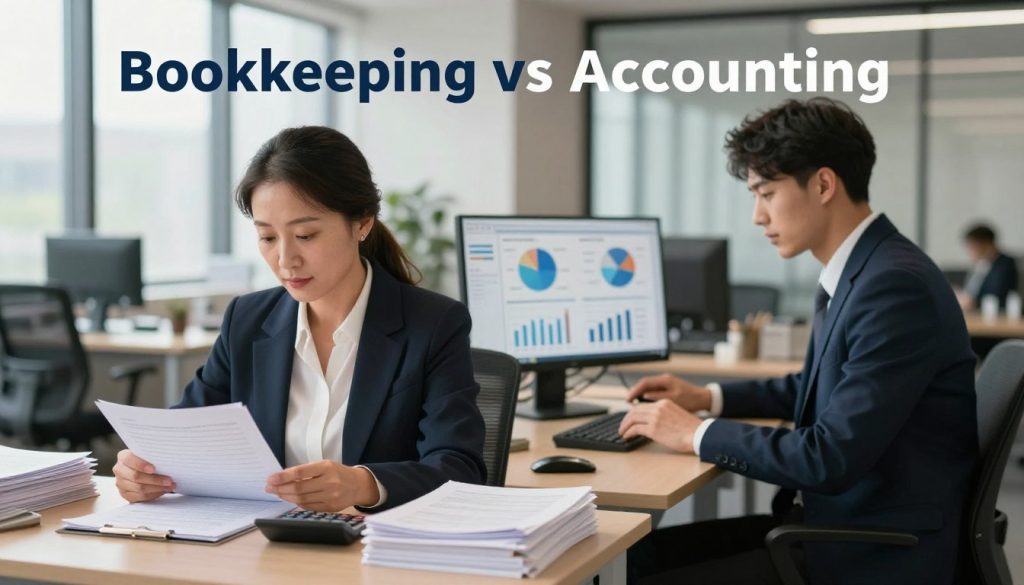
    A split-image concept illustrating "Bookkeeping vs Accounting," showcasing the key differences. In the foreground, on the left, depict a diligent bookkeeper, a middle-aged woman in smart business attire, carefully organizing documents and using a calculator surrounded by stacks of financial records, representing meticulous detail-oriented work. In the middle ground, present an accountant, a young man in a business suit, analyzing data on a computer screen with graphs and charts prominently displayed, symbolizing strategic analysis and financial planning. The background features a modern office environment, well-lit with natural light filtering through large windows, creating a professional and focused atmosphere. Use a slightly blurred effect for a soft focus on the background, emphasizing the professionals in the foreground.

    Defining the Role of Bookkeeping in Your Business

    Bookkeeping is about recording every financial deal your business makes. It’s the base of your financial system. Without it, you can’t see where your money goes or how much you make each day.

    A bookkeeper deals with the day-to-day stuff. They log receipts, process invoices, and check if your bank statements match your records. This keeps your books in order and ready for audits.

    Defining the Role of Accounting in Your Business

    Bookkeeping gives you the data, but accounting turns it into useful information for growth. It looks at the big picture to help you make smart choices. Accountants use the data to make reports, predict future trends, and handle taxes.

    “Accounting is the language of business, and it is the primary tool used to communicate the financial health of an organization to its stakeholders.”

    The table below shows the main differences between these two important roles:

    Feature Bookkeeping Accounting
    Primary Focus Recording transactions Analyzing data
    Scope Day-to-day operations Strategic planning
    Outcome Financial records Financial insights
    Complexity Routine and systematic Interpretive and complex

    By understanding these roles, you can figure out what your company needs. Whether it’s someone for daily cash management or a strategist for the future, knowing these definitions is key to financial clarity.

    Key Responsibilities of a Bookkeeper

    Mastering the key tasks of a bookkeeper can transform your financial workflow. Keeping records organized ensures your company is always ready for audits. Consistency is key to managing your small business finances well.

    Recording Daily Financial Transactions

    Every dollar in and out of your business needs to be tracked accurately. Modern accounting software simplifies this by automating data entry. Logging every sale and expense daily gives you a clear financial picture.

    Managing Accounts Payable and Receivable

    Good cash flow management starts with handling payments well. Paying vendors on time keeps relationships strong, while getting payments from clients quickly is essential. Bookkeeping services help you meet these deadlines without stress.

    Staying organized avoids late fees and missed revenue. Business bookkeeping is about more than just data entry; it’s about protecting your profits. Watching your accounts receivable keeps your cash flow healthy.

    Reconciling Bank Statements for Accuracy

    Reconciliation checks if your records match your bank activity. This step in business bookkeeping catches errors or fraud early. By comparing your logs with bank statements, you ensure your data is completely reliable.

    Using accounting software for reconciliation saves time each month. This habit prevents errors and gives you peace of mind for your small business finances. These daily tasks are the base of a stable and growing business.

    Strategic Benefits of Professional Accounting

    Bookkeeping looks at the past, but accounting shapes the future. It goes beyond just entering numbers. You get strategic insights that help you grow your business.

    This shift lets you see your business as a long-term success story. Experts turn numbers into a clear plan for your company’s future.

    Analyzing Financial Data for Growth

    Deep financial analysis is key for growing your business. By looking at your numbers, you find out what’s most valuable.

    This helps you use your resources better. Knowing your profit margins and cash flow lets you make data-driven decisions for steady growth.

    Ensuring Tax Compliance and Planning

    Keeping up with taxes is more than just filing on time. Using accounting software helps you keep accurate records and find tax savings.

    Good tax planning avoids big surprises when it’s time to file. With the right tools, you stay compliant and keep more money in your business.

    Interpreting Financial Statements for Decision Making

    Your financial statements show how healthy your business is. Professional financial reporting helps you understand these documents deeply.

    Good financial management lets you adapt quickly to market changes. By mastering these skills, you turn your accounting into a key to success and stability.

    Conclusion

    Understanding the difference between bookkeeping and accounting is key to running your business well. You now know how to tell apart daily tasks from big financial plans.

    Bookkeeping lays the solid base your business needs to run smoothly. Accounting turns those numbers into useful insights that help your business grow and stay stable.

    Look at your current processes to see where you might need help. You could hire someone or work with a service like QuickBooks or Xero. Your choice affects your business’s success.

    Make sure you focus on both bookkeeping and accounting. This keeps your records right and your tax planning on track. It also helps protect your assets and prepares you for growth.

    Take time to check your financial workflows today. Finding where your system is weak is the first step to reaching your business goals. Talk to a certified expert to improve your financial management strategy now.

    FAQ

    When looking at bookkeeping vs accounting: what’s the difference you need to know for your company?

    Bookkeeping is about recording daily financial transactions and keeping records. Accounting, on the other hand, analyzes this data to offer insights and help with tax compliance. It also aids in strategic financial management.

    What are the primary responsibilities included in professional bookkeeping services?

    Bookkeepers handle your small business’s daily finances. They record transactions, manage accounts, and perform bank reconciliations. They use software like QuickBooks to keep your records accurate and ready for audits.

    How does accounting contribute to my long-term business growth?

    Accountants turn bookkeeping data into a roadmap for growth. They create financial reports and help with tax planning. Their expertise ensures your business can scale while following IRS rules.

    Can I manage my small business finances using only accounting software?

    Accounting software like FreshBooks is great for automating bookkeeping. But, a professional is needed to interpret the data. They ensure your financial strategy matches your business goals.

    Why is reconciling bank statements such a critical part of financial management?

    Reconciling bank statements checks if your records match your bank balance. It’s key for bookkeeping as it finds errors and unauthorized transactions. It keeps your cash flow accurate, vital for your business.

    At what point should I invest in both bookkeeping and accounting?

    Start with bookkeeping from the first transaction to keep records clear. As your business grows and taxes get complex, accounting becomes essential. It helps with financial reports and navigating the US business market.
  • How Cloud Migration Works for Small Businesses Explained

    How Cloud Migration Works for Small Businesses Explained

    Did you know that nearly 90% of modern companies see a big boost in productivity after moving to remote servers? This move is not just a trend. It’s a vital strategy for staying ahead in today’s fast market.

    Switching from local servers to the web might seem scary. But knowing the process is key to achieving operational agility and success. We’re here to help you through every step of this digital journey.

    This guide is your trusted friend as you tackle the challenges of moving your data. You’ll discover the essential concepts to modernize your setup with confidence and simplicity.

    Key Takeaways

    • Digital transformation is key to staying competitive today.
    • Switching to remote servers boosts your team’s daily work.
    • Good planning makes your technical move simpler.
    • Operational agility lets your company grow faster than ever.
    • Knowing the basics helps you make smart choices for your future.

    Understanding How Cloud Migration Works for Small Businesses

    A professional office setting illustrating cloud migration for small businesses. In the foreground, a diverse group of business professionals, dressed in smart casual clothing, stand around a large digital display showcasing a flowchart of cloud migration steps—like data transfer, security, and integration. In the middle ground, a sleek modern laptop on a wooden desk displays charts and graphs related to cloud services. The background features large windows with a cityscape view, symbolizing growth and connectivity. Warm, natural lighting fills the room, creating an inviting atmosphere. The camera angle is slightly elevated, capturing both the engaged team and the dynamic display, emphasizing collaboration and innovation in cloud migration.

    Learning about cloud migration for small businesses is the first step to update your digital setup. It means moving your data, databases, and apps from local servers to the cloud. This change lets you access your data from anywhere, giving your team unmatched flexibility.

    Defining the Cloud Transition Process

    Cloud migration is more than just moving files. It’s a strategic move to boost efficiency. You first check your current IT setup to see what can move to the cloud. Then, you pick a provider, plan the data move, and optimize your new setup for top performance.

    “The cloud is not a destination, but a way of doing business that empowers agility and innovation at every level of your organization.”

    Key Benefits of Moving Your Operations to the Cloud

    There are many cloud migration benefits for your company. Moving to the cloud means no more expensive hardware upkeep. This is great for cloud migration for smbs, as you only pay for what you use.

    Feature On-Premise Cloud-Based
    Maintenance High (Manual) Low (Automated)
    Scalability Limited Instant
    Cost Model Capital Expense Operating Expense

    Common Challenges Small Businesses Face During Migration

    While the benefits are clear, there are cloud migration challenges for small businesses. Downtime during the move can disrupt your work if not managed right. Also, keeping your data safe during the move needs a proactive security strategy.

    Training your team to use new cloud workflows is another challenge. Anticipating these issues early helps you plan a smooth transition for everyone.

    Essential Steps to Successful Cloud Migration

    Creating a solid small business cloud migration strategy begins with knowing your current digital setup. A well-planned roadmap helps avoid downtime and keeps your team working smoothly. These steps to successful cloud migration guide you through the complex world of IT with confidence.

    Assessing Your Current IT Infrastructure

    First, you need to check your current hardware and software. Find out which apps are ready for the cloud and which need updates or new versions. This step helps avoid problems later on.

    Choosing the Right Cloud Deployment Model

    Picking the right cloud environment is key for your growth. You must balance your needs with your budget to find the best fit for your business.

    Public Cloud Solutions for Scalability

    Public clouds are great for growing businesses. They let you pay only for what you use, perfect for businesses with changing needs.

    Hybrid Cloud Options for Data Security

    For businesses with sensitive data, a hybrid cloud might be best. It keeps important data safe while using the cloud for less critical tasks.

    Feature Public Cloud Hybrid Cloud
    Cost Low upfront Moderate
    Control Limited High
    Scalability High Flexible

    Developing a Data Backup and Security Strategy

    Security is vital when moving to the cloud. Use strong encryption and multi-factor authentication to keep your data safe from hackers.

    “Data is the lifeblood of your business, and protecting it during a transition is the most critical task you will undertake.”

    Always have a backup of your data somewhere else. This way, even if something goes wrong, your business can keep running.

    Executing the Migration in Phases

    Trying to move everything at once can cause problems. Instead, break your small business cloud migration strategy into smaller steps. Start with less important tasks to test your plan before moving key apps.

    • Phase 1: Audit and clean up existing data.
    • Phase 2: Migrate low-priority applications.
    • Phase 3: Transition core business systems.
    • Phase 4: Final optimization and staff training.

    By following these steps to successful cloud migration, you lay a solid base for your business’s future. Patience and careful planning are key for a smooth move.

    Cloud Migration Best Practices for a Smooth Transition

    Moving your business to the cloud is more than just setting up tech. It needs a strategic plan for long-term success. By following cloud migration best practices, you can reduce downtime and keep your assets safe. A well-thought-out plan helps you tackle digital transformation with confidence.

    Prioritizing Cost-Effective Cloud Migration Solutions

    Keeping your budget in check is key when moving to the cloud. Look for cost-effective cloud migration solutions that let you scale resources as needed. This way, you avoid spending on unused infrastructure.

    Using pay-as-you-go models helps keep your monthly costs steady. Smart resource allocation means you can use your capital for other business growth areas.

    Training Your Team for New Cloud Workflows

    Your technology’s value depends on your team’s skills. Giving them thorough training is vital for a smooth transition. When your staff knows how to use new digital tools, productivity stays high.

    Get your team involved in workshops or online courses. Empowering your employees with the right skills reduces stress and boosts cloud adoption.

    Monitoring Performance Post-Migration

    After your systems go live, watch them closely. Continuous monitoring helps spot issues before they affect your work. Track metrics like latency, uptime, and user experience to ensure your systems meet your needs.

    Automated alerts can quickly inform your IT team of any problems. Proactive maintenance keeps your digital setup stable and reliable.

    Ensuring Compliance and Data Privacy

    Keeping sensitive data safe is essential. Make sure your cloud provider meets data security and privacy standards. Regularly check your access controls to ensure only authorized people can access critical data.

    Following regulations like GDPR or HIPAA protects your reputation and builds trust with customers. Prioritizing security from the start lays a strong foundation for your cloud journey.

    Conclusion

    Your journey to a modern digital setup begins with a single, well-thought-out step. Moving to platforms like Amazon Web Services or Microsoft Azure gives your business the speed to keep up with today’s fast market.

    Strategic planning is key to every successful change. By checking your current needs and picking the best deployment model, you safeguard your assets and prepare for growth. Now, you have the tools to handle your data security and team workflows easily.

    Digital transformation leads to lasting success. Small businesses using these technologies often see better efficiency and lower costs. You know how to guide this change with focus and purpose.

    Start your move to a new cloud environment today. Your dedication to innovation will reward you as your business grows and takes on new chances. With the right tech, your company’s future looks bright.

    FAQ

    How exactly does cloud migration work for small businesses in simple terms?

    Cloud migration for small businesses means moving your digital stuff from local servers to a remote place. You work with big names like Amazon Web Services (AWS) or Microsoft Azure. This lets you access your business from anywhere, making it easier to manage.

    What are the most significant cloud migration benefits I should expect?

    You’ll see big changes right away. Your business will be more agile and you’ll save money. You won’t need to buy and keep up expensive hardware anymore. Plus, you get to use top tools like Google Workspace and Salesforce for better teamwork and flexibility.

    Can you outline the essential steps to successful cloud migration?

    First, check your current IT setup. Then, pick which apps to move. Choose a cloud type, like Public or Hybrid, based on your needs. Move in phases to keep things running smoothly and fix any issues without stopping your work.

    What are the typical cloud migration challenges for small businesses?

    You might worry about downtime and keeping data safe. Your team might need time to get used to new systems. But, tools like BitTitan can help, and planning and encryption can protect your data.

    How do I build a small business cloud migration strategy that fits my budget?

    Focus on what’s most important first. Use cost-effective solutions like DigitalOcean to avoid big bills. This way, you can keep your digital upgrade affordable and within your budget.

    What are some cloud migration best practices for managing my team?

    Make sure your team is ready for the change. Train them on new tools like Slack or Microsoft Teams before the big move. This way, they’ll be confident and productive right away.

    Are there specific cloud migration tips for small businesses to ensure long-term success?

    Keep an eye on how things are working and follow the rules for data safety. Use tools like CloudHealth to check your cloud use and cut waste. This keeps your setup efficient and secure for the future.

    Why is cloud migration for SMBs different than for large enterprises?

    For SMBs, it’s about staying ahead by being efficient. You have to be careful with your budget, so choose easy-to-use platforms. It’s about finding a balance between great performance and affordable costs.
  • Public Cloud vs Private Cloud: Key Differences You Should Know

    Public Cloud vs Private Cloud: Key Differences You Should Know

    Did you know over 90% of businesses now use remote infrastructure daily? Choosing the right data foundation is key, not just an IT task. It’s a critical business strategy.

    Knowing the public cloud vs private cloud: key differences is vital for success. These models meet different needs in today’s world. Pick the right one for your needs to boost performance and security.

    Choosing between them might seem hard at first. But, with a clear plan, you can grow without overspending. Let’s dive into how these systems work so you can decide wisely for your team.

    Key Takeaways

    • Cloud infrastructure is a fundamental pillar of modern business strategy.
    • Selecting the correct model directly impacts your operational efficiency.
    • Security requirements often dictate which environment suits your organization best.
    • Cost management varies significantly between these two primary deployment options.
    • A clear roadmap helps you avoid common pitfalls during digital migration.

    Understanding the Public Cloud vs Private Cloud: Key Differences

    A visually striking image contrasting public cloud services and private cloud solutions. In the foreground, a sleek, modern office with a diverse group of professionals in business attire, engaged in a discussion around a large digital screen displaying data visualization of cloud computing. In the middle, clouds are represented as interconnected nodes, symbolizing public cloud services, while distinct servers and a locked data center illustrate private cloud solutions. The background features a city skyline, signifying urban infrastructure powered by cloud technology. The lighting is bright with a futuristic blue hue, casting soft shadows for depth. The composition should create a sense of innovation and professionalism, emphasizing the technological advancements in cloud computing.

    When you compare public and private cloud options, you decide where your data lives. Choosing the right infrastructure is key for any business. Knowing the differences between these cloud computing models helps you plan your IT strategy.

    Defining Public Cloud Services

    Public cloud services use a shared setup where a third-party manages the hardware. You share resources with others over the internet. This model is popular because it saves you from handling physical maintenance.

    “The public cloud is the ultimate equalizer, providing massive scale and innovation to businesses of all sizes without the need for heavy upfront capital.”

    Key features of these services include:

    • Elasticity: You can scale resources up or down instantly based on demand.
    • Cost-Efficiency: You pay only for what you use.
    • Accessibility: Services are available worldwide, great for remote teams.

    Defining Private Cloud Solutions

    Private cloud solutions offer a dedicated space just for your organization. You control the hardware, software, and network. This is best for industries with sensitive data and strict rules.

    Private clouds offer better performance because they’re not shared. The initial cost is higher, but they offer customization and security for specific needs.

    Core Architectural Distinctions

    The main difference is in ownership and isolation. Public clouds focus on shared efficiency, while private clouds prioritize control. Knowing these differences helps you choose the best for your needs.

    Feature Public Cloud Private Cloud
    Hardware Ownership Third-party provider Your organization
    Resource Sharing Multi-tenant Single-tenant
    Management Provider-managed Internal IT team
    Security Level Standardized Highly customizable

    Your choice depends on whether you want to manage things yourself or need flexibility. Whether you pick public cloud services for speed or private cloud solutions for security, it affects your efficiency for years.

    Top Factors to Consider When Choosing Your Cloud Model

    Choosing the right cloud deployment options can be tough without a plan. Every company has its own goals that decide the best infrastructure. By looking at your needs, you can make sure your tech supports your growth.

    Cost Efficiency and Scalability

    The benefits of public cloud include cost savings. You only pay for what you use, which controls costs. This is great for businesses with changing needs that can scale up or down quickly.

    Security and Compliance Requirements

    For sensitive data, cloud security considerations are key. Public clouds have strong security, but some need private cloud’s isolation. You must check if your rules require certain data protection.

    Control and Customization Needs

    The advantages of private cloud are clear for those needing control. It lets you customize for specific needs. If you have unique systems, private cloud gives you the flexibility you need.

    Performance and Latency Considerations

    Performance depends on data location. For low latency, on-premises or private data centers might be better. But, public clouds are expanding to reduce these issues.

    The Potencial of a Hybrid Cloud Environment

    Many see a hybrid cloud environment as the best mix. It combines public and private for agility and security. This way, you can tailor your setup for each app’s needs.

    • Public Cloud: Best for rapid scaling and cost-efficiency.
    • Private Cloud: Best for high control and strict compliance.
    • Hybrid Cloud: Best for balancing flexibility and security.

    Conclusion

    Choosing the right cloud environment is the first step in changing your business. You now know how to weigh performance against flexibility. This helps you match your tech with your future goals.

    As your company grows, so will your infrastructure needs. Keeping an eye on cloud security is key to protecting your data. Think of this choice as a strategy that evolves with your business.

    Big names like Amazon Web Services, Microsoft Azure, and Google Cloud have tools for your growth. Staying up-to-date with trends keeps you ahead. Focus on security to protect your assets while you innovate. Use these tips to build a strong base for your future plans.

    FAQ

    What are the public cloud vs private cloud: key differences that I should focus on first?

    The main difference is how resources are shared. In a public cloud services model, like Microsoft Azure or Amazon Web Services (AWS), you share hardware and network devices with others. On the other hand, private cloud solutions give you a dedicated environment. This means you have more privacy and control over your infrastructure.

    What are the primary benefits of public cloud for a small but growing business?

    The public cloud is great for agility and cost efficiency. You can quickly scale your resources to meet demand without buying servers. You also pay as you go, which makes your IT spending more flexible.

    What are the main advantages of private cloud for organizations in highly regulated industries?

    For businesses needing to follow strict standards like HIPAA or PCI-DSS, private cloud offers big benefits. You get full control over your data and security. This is because you’re not sharing hardware with others, allowing for custom security settings.

    How do I compare public and private cloud when it comes to long-term costs?

    To compare public and private cloud, look at the Total Cost of Ownership (TCO). Public cloud is cheaper to start with, but monthly fees can add up. Private clouds cost more upfront but might be cheaper over time for large, steady workloads.

    When should I consider implementing a hybrid cloud environment?

    A hybrid cloud environment is best when you want flexibility. Use your private infrastructure for sensitive data and “burst” into public providers like Google Cloud when needed. This way, you can customize your cloud deployment options for each application.

    What are the most critical cloud security considerations for my IT team?

    Always remember the “Shared Responsibility Model.” In public clouds, the provider handles the physical setup, but you secure your data and applications. In private clouds, you’re responsible for everything. Focus on encryption, identity management, and regular audits to ensure your cloud security considerations are met.

    Are there specific cloud computing models that help with data sovereignty?

    Yes, for data sovereignty needs like GDPR, private cloud solutions are best. While public clouds offer regional data centers, private clouds ensure your data stays within specific borders.
  • Professional Liability vs General Liability Coverage Explained

    Professional Liability vs General Liability Coverage Explained

    Did you know nearly 40% of small businesses face a lawsuit in their first decade? This fact shows why understanding liability coverage is key to protecting your assets.

    It can be tough to understand the difference between Professional Liability vs General Liability Coverage when you’re busy running your business. But, picking the right protection is critical for your financial safety.

    This guide is here to help you make smart choices. Learning about these important topics early can shield your business from legal and financial risks.

    Key Takeaways

    • Lawsuits are a common risk for many small businesses in the United States.
    • General protection typically covers physical accidents and property damage.
    • Professional policies focus on errors, omissions, and negligence in your services.
    • Having both types of insurance creates a complete safety net for your operations.
    • Proactive risk management helps ensure your company remains stable during legal disputes.

    Understanding the Core Differences in Professional Liability vs General Liability Coverage

    A split-screen illustration depicting the core differences between Professional Liability and General Liability Coverage. On the left side, a professional setting with an attorney or consultant in a business suit engaged in conversation with a client, surrounded by documents and charts symbolizing advice and services. Soft, natural lighting enhances the serious atmosphere. On the right side, a construction site with workers wearing helmets and safety vests, showcasing a more hands-on environment with visible tools and machinery. Bright, clear lighting emphasizes safety and activity. The background features a cityscape blending both professional and industrial elements, symbolizing the diverse applications of each type of coverage, creating a balanced and informative visual representation.

    Business insurance is complex, but knowing the basics is key. When you look at Professional Liability vs General Liability Coverage, you see two main shields for your company. Each policy plays a unique role in protecting your business.

    What General Liability Insurance Protects

    General liability insurance is often called “slip and fall” coverage. It covers physical risks on your business premises or during operations. For example, if a client trips on a loose rug in your office, this policy helps pay for their medical bills.

    It also protects against damage to property caused by your team. If you accidentally damage a client’s expensive equipment while working, your general liability policy will help cover the costs. This coverage is key for keeping your business reputation safe after an accident.

    What Professional Liability Insurance Protects

    General liability handles physical accidents, but professional liability covers service-related errors. This is critical for businesses that offer advice, consulting, or specialized services. It protects you if a client claims your work caused them financial loss.

    Even if you’ve done nothing wrong, defending against a lawsuit can be very costly. Professional liability insurance covers legal fees and settlements for claims of negligence or mistakes. Knowing these policy coverage details is essential for service-based business owners.

    Key Distinctions Between the Two Policies

    Understanding the differences between professional and general liability is vital for a secure future. A good insurance comparison helps spot any gaps in your protection. Use the table below to see how these policies compare.

    Feature General Liability Professional Liability
    Primary Focus Physical/Bodily Harm Service/Advice Errors
    Typical Claim Slip and Fall Negligence/Omissions
    Financial Impact Property/Medical Costs Client Financial Loss
    Business Need Essential for All Essential for Experts

    By doing a thorough insurance policy comparison, you can make sure your business is well-protected. Don’t wait for a claim to check your coverage. Understanding these policies now can save you a lot of stress later.

    Top Reasons Your Business Needs General Liability Insurance

    When you open your doors to the public, you take on specific risks. These risks need careful management. Securing the right policy coverage details is key to protect your assets from unexpected legal claims.

    Coverage for Bodily Injury and Property Damage

    Accidents can happen anywhere, even in well-maintained places. If a customer slips on a wet floor or trips over a rug, you might face medical bills. This insurance helps cover those costs, so your business doesn’t have to pay out of pocket.

    This coverage also protects against damage to others’ property. If an employee breaks a client’s expensive equipment, your policy can help with repair or replacement. This protection ensures a single mistake won’t hurt your financial stability.

    Protection Against Personal and Advertising Injury

    Your marketing efforts are vital but carry hidden risks. If your ads are accused of libel, slander, or copyright infringement, you could face a costly lawsuit. Understanding liability coverage means knowing that your words and images can be risky.

    This coverage defends your brand reputation when someone claims your marketing caused them harm. It provides the legal support needed to handle these disputes. By choosing the right business insurance options, you protect your creative efforts from legal trouble.

    Why It Is Often Considered the Foundation of Business Insurance

    Most experts agree that general liability is essential for any business in the United States. It offers a broad safety net for common threats faced by businesses of all sizes. Without it, your company is vulnerable to everyday mishaps that can lead to major financial losses.

    Risk Category Potential Impact Insurance Solution
    Bodily Injury High medical costs General Liability
    Property Damage Asset replacement General Liability
    Advertising Injury Legal fees/Reputation General Liability

    Building a resilient business strategy requires a proactive approach to risk. By establishing this foundation, you gain the peace of mind needed to focus on growth and innovation. It is a critical step in ensuring your business remains secure for years to come.

    Essential Benefits of Carrying Professional Liability Insurance

    Every consultant and service provider faces unique risks. These risks need special insurance solutions. General policies cover physical accidents, but liability insurance benefits protect your reputation and finances. Knowing this is key to success.

    Safeguarding Against Claims of Negligence

    When you give expert advice, clients expect the best. If they think your advice caused a loss, they might sue you. This coverage is a critical shield that keeps your career safe from one mistake.

    These commercial coverage plans help when your work is questioned. They cover legal costs and damages. This lets you focus on your work, not legal worries.

    Handling Allegations of Errors and Omissions

    Even careful professionals can face errors or omissions claims. A missed deadline or oversight can lead to expensive legal battles. The right policy gives you the means to defend yourself strongly.

    “Risk management is not about avoiding all mistakes, but about ensuring that your business remains resilient when challenges arise.”

    Comparing insurance policies helps find the best for your industry. You want to know your assets are safe from unexpected claims.

    Why Service-Based Businesses Require This Specific Protection

    Service-based businesses need client trust and to keep running. Without the right coverage, a lawsuit could shut you down. Investing in commercial coverage plans secures your future.

    The table below shows why this protection is vital for your business:

    Feature General Liability Professional Liability
    Primary Focus Physical Harm Financial Loss
    Legal Defense Included Included
    Policy Comparison Standard Specialized
    Business Need Foundation Essential

    Liability insurance benefits do more than protect; they show your commitment to clients. By keeping a detailed insurance policy comparison, your business stays competitive and safe in a changing market.

    Conclusion

    Building a strong company needs a smart risk management plan. You now know how to mix different policies for a balanced portfolio.

    Doing a deep insurance comparison helps spot missing coverage. You can pick the best business insurance to protect your assets from legal surprises.

    Knowing the right liability insurance for your field helps you make smart choices. You feel secure knowing your coverage fits your daily risks.

    Next, check your current policies with a trusted company like Hiscox or Travelers. Planning ahead builds a solid base for your future growth.

    Share your insights on managing business risks in the comments below. Your stories help other business owners understand commercial coverage better.

    FAQ

    What are the primary differences between professional and general liability insurance for my business?

    General liability insurance covers physical risks, like a visitor slipping at your office. Professional liability, or Errors and Omissions, covers intangible risks, like financial loss from your advice. Knowing both types of coverage is key to protecting your business from different lawsuits.

    Does my small business really need both of these commercial coverage plans?

    Yes, in many cases. A General Liability policy is a good start, but it won’t protect against claims of negligence in your services. If you offer expert services, like using Autodesk or HubSpot, you need both for full protection. Getting insurance early helps protect against accidents and professional errors.

    What specific policy coverage details should I look for in a General Liability plan?

    Look for coverage for bodily injury, property damage, and personal and advertising injury. This includes protection if a client trips in your lobby or if you’re sued for libel. Many landlords, like those at WeWork, require this coverage before leasing.

    How do the liability insurance benefits of a Professional Liability policy protect my reputation?

    Professional liability protects you when your expertise is questioned. It covers legal costs and payouts if a client claims your negligence caused financial loss. For example, if your IT advice leads to a data breach on a client’s Azure server, this policy can save your business.

    Can I bundle these business insurance options to save money?

    Yes, many carriers offer bundled packages, like a Business Owner’s Policy (BOP). These packages can include both types of coverage at a discount. Comparing policies helps you find the best deal for your business.

    Why is it important to do a frequent insurance policy comparison?

    As your business grows, so do your risks. Regularly reviewing your policy ensures your coverage is up to date. Staying proactive with your insurance helps you adapt to new laws and keeps your business stable financially.
  • General Liability Insurance for Small Businesses Explained

    General Liability Insurance for Small Businesses Explained

    Did you know over 40% of entrepreneurs in the U.S. face a lawsuit? This shows why protecting your company from unexpected losses is key. Understanding General Liability Insurance for Small Businesses Explained makes managing risks easier.

    Investing in small business insurance acts as a safety net for your assets. Many owners feel more secure once they grasp business insurance explained clearly. Understanding liability insurance is the first step to building a strong business that can handle any challenge.

    Key Takeaways

    • Lawsuits are a common risk for entrepreneurs, making coverage essential.
    • Proper protection helps safeguard your personal and professional assets.
    • Clear knowledge of policy terms reduces operational anxiety.
    • Building a resilient foundation starts with proactive risk management.
    • Coverage provides the peace of mind needed to focus on growth.

    Core Components of General Liability Insurance for Small Businesses Explained

    Understanding liability coverage for businesses is easier when you break it down. Knowing how your policy works boosts your confidence in running your business. This guide helps you grasp what General Liability Insurance for Small Businesses Explained means for your daily operations.

    A visually engaging illustration to explain the core components of General Liability Insurance for small businesses. In the foreground, a diverse group of three professionals, dressed in smart casual attire, are gathered around a table scattered with insurance documents and a laptop displaying graphs. In the middle, clear visual elements representing liability insurance, such as a shield icon, checklists, and business icons (like storefronts and products) are creatively integrated. The background features a calm office space with soft lighting, emphasizing a collaborative atmosphere. The angle is slightly overhead to highlight the interaction among the professionals, conveying clarity and focus on their discussion. The overall mood is informative yet inviting, encouraging understanding of insurance essentials without the distraction of text or logos.

    Bodily Injury Liability Coverage

    This part of your policy protects you if someone gets hurt on your business premises. For instance, if a customer slips on a wet floor, this coverage pays for their medical bills. It also covers legal costs if they sue your company.

    Property Damage Protection

    Accidents can cause damage to someone else’s property. This protection covers repair or replacement costs. Using commercial general liability insurance helps avoid big financial losses from small accidents.

    Personal and Advertising Injury Claims

    Many business owners are surprised to learn their policy covers non-physical harm. This includes libel, slander, or copyright infringement in marketing materials. Protecting your brand’s reputation is as important as protecting your physical assets.

    “Risk management is not just about avoiding trouble; it is about ensuring your business has the financial resilience to recover when the unexpected occurs.”

    — Industry Risk Analyst

    To understand how these components work together, consider the following breakdown:

    Coverage Type Primary Focus Common Example
    Bodily Injury Physical harm to others Customer slip and fall
    Property Damage Damage to client items Broken equipment during service
    Personal Injury Reputational or legal harm Accidental copyright violation

    By having commercial general liability insurance, you invest in your business’s future. Reliable liability coverage for businesses lets you focus on growth, not worrying about legal costs.

    Essential Benefits of Liability Coverage for Your Company

    Insurance is more than just a cost. It’s a key part of your company’s stability. The right policy offers small business insurance benefits that help your business grow.

    Seeing your policy as a strategic asset protects your business from financial surprises. This way, you can focus on growing your business instead of dealing with emergencies.

    Financial Protection Against Lawsuits

    A lawsuit can be very harmful to a growing business. Without business liability insurance coverage, you might have to pay legal fees and settlements yourself. This could lead to bankruptcy.

    A good policy acts as a shield against these costs. It lets you handle legal issues without hurting your budget or personal savings.

    “Risk management is not about avoiding risk entirely, but about ensuring that when risks materialize, your business remains resilient enough to continue its mission.”

    — Industry Risk Analyst

    Building Trust with Clients and Landlords

    Being professional means managing risks well. Having liability coverage for businesses shows you’re responsible and reliable.

    Many landlords and clients need to see your insurance before they sign a contract. This shows you’re ready for anything and builds trust.

    Access to Legal Defense Resources

    Small business insurance gives you more than just payouts. It also gives you a team of experts. When you face a claim, your insurer often provides legal help.

    This help is very valuable when dealing with complex lawsuits. It gives you peace of mind and professional guidance during tough times.

    Feature Uninsured Business Insured Business
    Legal Fees Paid by owner Covered by policy
    Client Trust Often questioned High credibility
    Risk Exposure High financial risk Managed risk
    Defense Team None provided Expert legal support

    In the end, business liability insurance coverage is an investment in your business’s future. By focusing on liability coverage for businesses, you protect your business from the unpredictable market.

    Common Risks That Require Business Liability Insurance

    Running a business means dealing with hidden dangers every day. Even the most careful owners can face unexpected events. These can lead to expensive legal fights. It’s key to manage risks and prepare for these common scenarios.

    Slip and Fall Accidents on Your Premises

    Slip and fall accidents are a common reason for insurance claims. They can happen in any business, from retail shops to offices. A wet floor or a loose rug can cause serious injuries.

    These incidents happen in an instant, but the costs can last for months. Having commercial general liability insurance helps protect your business. It ensures you can stay stable even if faced with a lawsuit.

    Damage to Client Property During Service

    Handling expensive items for clients can be risky. If you accidentally damage something, you might have to pay for repairs. Understanding liability insurance is key for your peace of mind.

    With the right coverage, you can avoid high costs from property damage claims. It lets you focus on quality work without worrying about one mistake ruining your business.

    Libel, Slander, and Copyright Infringement

    In today’s digital world, marketing can sometimes lead to legal issues. Using copyrighted images or making a defamatory post can lead to claims. It’s important to understand business insurance well.

    Commercial general liability insurance often covers these claims. It helps you deal with the complexities of digital communication. Knowing these risks helps build a stronger, more successful business.

    Conclusion

    Planning ahead is key to protecting your business from legal surprises. By adding small business risk management to your daily routine, you build a strong base for growth.

    Knowing the value of business liability insurance brings peace of mind. It acts as a safety net, letting you focus on your customers without legal worries.

    Review your current policy today. You might find that your insurance offers more than just financial help. It gives you the confidence to grow and compete in the market.

    Get in touch with reliable providers like Hiscox or Travelers to talk about your needs. Checking your coverage now helps keep your business strong against future challenges.

    FAQ

    How can I find general liability insurance for small businesses explained in simple terms?

    General liability insurance for small businesses is like a financial shield. It covers costs for injuries to others, damage to property, and legal fees for libel or copyright issues. Companies like The Hartford and State Farm offer these policies to protect your business from big financial losses.

    What are the primary pillars of commercial general liability insurance?

    Commercial general liability insurance covers three main areas: bodily injury, property damage, and personal/advertising injury. For instance, if a customer gets hurt on your wet floor, your insurance pays for their medical. If you damage someone’s MacBook, your insurance covers that too. Knowing these areas helps you avoid surprises from everyday risks.

    What are the most significant small business insurance benefits for a new entrepreneur?

    Small business insurance offers more than just claim payments. It boosts your professional image and gives you peace of mind. Many landlords and high-value clients require proof of coverage before working with you. It shows you’re serious about managing risks and are a reliable partner.

    Why is business insurance explained as a tool for legal defense?

    Business insurance experts often talk about the “duty to defend.” This means your insurance will cover your legal costs, even if the lawsuit is baseless. This protection is more valuable than the claim itself, as it saves your time and reputation.

    How does liability coverage for businesses help with small business risk management?

    Liability coverage helps manage risks by transferring financial risk to the insurer. It covers accidents like slips and falls or mistakes in ads. With the right insurance, your business can face legal challenges and keep growing.
  • When Should Homeowners Consider Basement Waterproofing?

    When Should Homeowners Consider Basement Waterproofing?

    Did you know that over 60% of houses in the United States face below-grade moisture issues? This problem often goes unnoticed until it damages your property’s foundation or harms your indoor air quality.

    Protecting your living space is key to good property care. Spotting early signs can save you thousands of dollars in repairs and mold removal.

    Many wonder, when should homeowners consider basement waterproofing? The answer is clear: as soon as you see damp walls, musty smells, or small cracks. Taking action early keeps your basement dry, safe, and usable for your family.

    Key Takeaways

    • Moisture control is essential for maintaining your home’s structural integrity.
    • Early detection of water issues prevents expensive foundation repairs.
    • Improving air quality protects your family from mold growth.
    • A dry lower level adds significant long-term value to your property.
    • Proactive maintenance is always more cost-effective than emergency restoration.

    Signs That Indicate You Need Basement Waterproofing

    A dimly lit basement showcasing clear signs of water damage. In the foreground, a close-up view of peeling paint on the walls and a section of wet, stained drywall, revealing discoloration and mold growth. In the middle, a puddle of stagnant water collects on the concrete floor, surrounded by rusted tools and a damp, forgotten rug. The background features shelves with cardboard boxes showing signs of water exposure, slightly sagging under the weight of moisture. The atmosphere is somber and slightly eerie, with soft, diffuse lighting that accentuates the water stains and textures. The angle captures the depth of the basement, emphasizing the overwhelming sense of neglect and the urgent need for repair.

    Spotting the signs of basement water damage early can save you a lot of money. Your home often shows signs when moisture starts to harm it. By acting fast, you can get the benefits of basement waterproofing, like better air and a higher home value.

    Visible Water Stains and Efflorescence

    Water stains on walls or floors are a big sign of leaks. You might also see a white, powdery stuff called efflorescence. This happens when water goes through concrete and leaves mineral deposits behind.

    A little dust might seem okay, but it means moisture is getting through your foundation. If you ignore it, more water can get in over time.

    Musty Odors and Persistent Humidity

    A damp smell in your basement means there’s trapped moisture. This smell comes from mold or mildew hidden in walls or under floors. High humidity can damage things and make breathing hard for your family.

    Cracks in Foundation Walls or Floors

    Cracks need your attention, even if they’re small. Thin cracks might just be shrinkage, but big gaps mean water pressure. This pressure can turn small leaks into big problems.

    Rusting Metal Fixtures and Peeling Paint

    Too much moisture can rust metal in your basement. If you see rust on metal, your humidity is too high. Paint that bubbles or peels off walls also means moisture is trapped.

    Indicator Severity Level Recommended Action
    Hairline Cracks Low Monitor regularly
    Efflorescence Medium Consult a professional
    Standing Water High Immediate repair needed
    Musty Odors Medium Improve ventilation

    Knowing these signs helps you take care of your home. By being proactive, you can enjoy the benefits of basement waterproofing for a long time.

    When Should Homeowners Consider Basement Waterproofing?

    Knowing when to waterproof your basement can save you a lot of money. It’s best to act before a big storm hits. This way, you protect your home’s value and your peace of mind.

    Evaluating the Importance of Proactive Waterproofing

    The importance of basement waterproofing is huge for keeping your home in good shape. Fixing moisture problems early stops mold and damage. These issues can harm your living space.

    Proactive care protects your foundation. It keeps your home safe and dry, no matter the weather.

    Common Basement Waterproofing Methods

    Homeowners have many best basement waterproofing methods to choose from. The right one depends on where the water comes from and your home’s layout.

    Interior Drainage Systems and Sump Pumps

    Interior systems handle water that’s already in your basement. A perimeter drain and a strong sump pump redirect water away from your foundation.

    This method is great for how to prevent basement flooding during rainy seasons. These systems work quietly to keep your floors dry.

    Exterior Excavation and Waterproofing Membranes

    For serious cases, exterior solutions create a strong barrier against groundwater. This involves digging around your foundation to apply waterproof membranes and install drainage boards.

    This is a bigger project but offers a lasting solution. It stops water from reaching your foundation walls.

    Budgeting for Basement Waterproofing Costs

    When planning your budget, it’s key to know what affects the basement waterproofing cost. Prices change based on your basement’s size, the water damage, and the repair method.

    • System Complexity: Interior systems are cheaper than exterior excavations.
    • Labor Requirements: Excavation needs heavy machinery and more time, raising the cost.
    • Material Quality: Better materials and pumps last longer but cost more upfront.

    DIY Basement Waterproofing Tips for Minor Issues

    For small moisture problems, there are diy basement waterproofing tips you can try. These steps are good for fixing small leaks or condensation before they get worse.

    First, make sure your gutters and downspouts are clear to keep rainwater away. You can also use masonry sealants on small wall cracks to stop leaks. Remember, these DIY fixes are for minor issues. If you see big cracks or flooding, call a pro.

    Conclusion

    Protecting your home from water damage begins with a solid plan. Regular inspections are key to catching moisture problems early. This can prevent costly repairs.

    For minor issues, you can handle maintenance yourself. But, if you see big cracks or constant flooding, you need a pro.

    Looking for basement waterproofing companies near you is a good first step. These experts use the latest tools and methods to fix your foundation. A certified team will ensure your home gets a solution that lasts, fitting your local climate.

    Acting now will give you peace of mind for your family. A dry basement means better air quality and a safer home. Start looking for basement waterproofing companies near you today to protect your property for the future.

    FAQ

    When should homeowners consider basement waterproofing?

    You should think about it when you see any moisture signs. But, it’s best to act before a problem arises. This way, you protect your home and keep the air inside healthy for your family.

    What are the most common signs of basement water damage?

    Look for water stains, peeling paint, or efflorescence on walls. Also, watch for musty smells, rust, and small cracks in walls or floors.

    What are the primary benefits of basement waterproofing?

    Waterproofing does more than keep your basement dry. It stops mold, protects your foundation, lowers energy costs, and boosts your home’s value.

    How much does the average basement waterproofing cost?

    Costs vary by home size and problem severity. Small fixes are cheap, but bigger solutions can cost thousands to over $10,000.

    What are the best basement waterproofing methods for a permanent fix?

    The best methods mix interior and exterior fixes. This includes using top sump pumps, interior drainage, and waterproofing membranes on the outside.

    Do you have any diy basement waterproofing tips for minor issues?

    Yes! For small moisture, clean gutters, extend downspouts, and use a masonry sealer like DRYLOK on walls.

    How can I prevent basement flooding during a heavy rainstorm?

    Check your sump pump and get a battery backup. Also, slope the soil away from your foundation to keep water from pooling.

    How do I find the most reliable basement waterproofing companies near me?

    Look for well-known companies like Basement Systems or Everdry Waterproofing. Make sure they are licensed, insured, and offer warranties.
  • How Much Does Foundation Repair Typically Cost? Estimates

    How Much Does Foundation Repair Typically Cost? Estimates

    Did you know ignoring small structural damage can cut your home’s value by up to 30%? Your house is probably your biggest investment. Its stability depends on the concrete slab or basement beneath it.

    Proactive maintenance is key to avoiding big financial problems later. Fixing small cracks or settling issues early keeps your equity safe and your family safe.

    Many homeowners feel scared when they see structural problems. You might wonder how much does foundation repair typically cost when planning your budget. Knowing these costs is vital for any homeowner in the United States.

    By the end of this guide, you’ll feel empowered to tackle your home improvement projects with confidence. Let’s look at what affects your final cost.

    Key Takeaways

    • Structural issues can significantly decrease your home’s total market value.
    • Early detection of cracks prevents more expensive, complex fixes later.
    • Budgeting for professional assessments is a smart move for long-term stability.
    • Several factors, including soil type and damage severity, influence final pricing.
    • Understanding these expenses helps you make informed decisions for your property.

    Understanding How Much Does Foundation Repair Typically Cost?

    Many homeowners wonder about the cost of foundation repair. They feel lost with the many quotes from local experts. A good foundation repair pricing guide can help you understand these costs better and plan your budget.

    A professional home inspector standing on a residential foundation, reviewing a clipboard filled with notes and cost estimates for foundation repair. The inspector, dressed in smart business casual attire, is focused intently on the clipboard, which has clear diagrams of potential foundation issues. In the foreground, a cracked concrete foundation is visible, highlighting areas that may need repair. The middle ground showcases a typical suburban house, with lush green grass and trees, providing a homey context. The background features a bright blue sky with soft, diffused sunlight pouring down, creating a warm and inviting atmosphere. The overall mood conveys professionalism and diligence, emphasizing the importance of cost estimates in foundation repair.

    The National Average for Foundation Repairs

    The average cost of foundation repair in the U.S. is between $3,000 and $7,000. Small fixes like sealing cracks are cheaper, but big repairs can cost over $10,000. Think of these numbers as a starting point, not a final price for your project.

    Several things affect your repair cost. To understand your investment, consider these factors:

    • The total square footage of the area needing work.
    • The type of foundation, like slab or basement.
    • How easy it is to get heavy equipment to the site.
    • The soil type and how much water it holds.

    Why Estimates Vary Between Contractors

    Two companies might give very different quotes for the same job. This is because of the contractor’s expertise and business style. Companies with more overhead, like those with warranties, charge more than smaller ones.

    Experience is key for your home’s long-term health. Contractors who use the latest tools and materials give more accurate, but pricier, quotes. Always choose quality over the cheapest price to keep your home stable.

    Key Factors Influencing Your Foundation Repair Cost Estimate

    Getting an accurate foundation repair cost estimate is more than just looking at averages. Your final bill depends on many factors specific to your property. Knowing these foundation repair cost factors helps you understand the investment needed to fix your home.

    The Severity of Structural Damage

    The damage’s extent is a big factor in your costs. Small cracks might just need sealing, but big problems like settling or bowing walls need more work. Complex repairs take more time and special tools, raising the price.

    When your home’s structure is at risk, experts must carefully check it. Extensive damage might need steel piers or helical piles to support your home. These costs show the need for skilled engineering to keep your home safe.

    Soil Conditions and Site Accessibility

    The ground under your home affects repair difficulty. Soils like expansive clay need deeper piers to stabilize. Rocky or unstable soil makes repairs harder, raising costs.

    How easy it is to get to your foundation also matters. Tight crawl spaces or hard-to-reach areas mean more manual work. This can make your bill higher.

    The Square Footage of the Affected Area

    Homeowners often ask about the size’s impact on costs. Contractors use the foundation repair cost per square foot to estimate the work. This helps compare different areas needing repair.

    But, bigger areas don’t always mean more cost. Equipment setup and mobilization can be the biggest expenses. Looking at the total scope of work helps understand why costs vary.

    Common Types of Foundation Repairs and Their Price Ranges

    When you face structural issues, knowing the price range for different repair techniques is essential for your budget. A reliable foundation repair cost estimate helps you prepare for the financial commitment required to stabilize your home. By consulting a foundation repair pricing guide, you can better understand how specific methods impact your total investment.

    Pier and Beam Adjustment Costs

    If your home sits on a pier and beam foundation, you may eventually need adjustments to keep the structure level. This process often involves adding shims or replacing damaged piers to restore stability. Professional contractors typically charge based on the number of piers that require adjustment or replacement.

    Slab Jacking and Mudjacking Estimates

    Slab jacking is a popular method for lifting sunken concrete sections back to their original position. This technique involves pumping a specialized grout or foam mixture beneath the slab to fill voids. It is generally faster and less invasive than traditional excavation methods, making it a preferred choice for many homeowners.

    Foundation Crack Repair and Sealing

    For minor issues, you might look for affordable foundation repair options to prevent further damage. The cost of foundation crack repair is usually lower than major structural interventions, when the cracks are non-structural. Epoxy or polyurethane injections are commonly used to seal these gaps and prevent water intrusion.

    Full Foundation Underpinning Expenses

    Underpinning is a major structural intervention used when a foundation needs deep support to prevent settling. This process involves extending the foundation to reach more stable soil layers. While this is a significant investment, it provides a permanent solution for severe structural failure.

    Repair Method Typical Cost Range Complexity Level
    Crack Sealing $500 – $2,500 Low
    Slab Jacking $1,500 – $5,000 Moderate
    Pier Adjustment $2,000 – $8,000 Moderate
    Underpinning $10,000 – $30,000+ High

    Keep in mind that the foundation repair cost per square foot can fluctuate based on your local labor rates and material availability. Always obtain multiple quotes to ensure you are receiving a fair price for the work performed on your property.

    Conclusion

    Understanding structural maintenance is key to protecting your property. You now know how to assess the cost of foundation repair.

    When looking at the average cost, consider your site’s specific needs. Get quotes from trusted companies like Olshan Foundation Solutions or Ram Jack. This way, you can compare prices.

    For many, finding affordable foundation repair is a priority. Fixing small issues early can save you money. This prevents costly damage later.

    Small cracks can hide big problems. Fixing cracks now can save your walls and floors from damage.

    Quality work keeps your home stable for years. Contact a licensed professional for an inspection. This will give you peace of mind about your home’s foundation.

    FAQ

    How much does foundation repair typically cost for the average American home?

    Foundation repair costs vary by home. Most homeowners pay between $2,000 and $7,500. But, if your home needs a lot of work, like Ram Jack does, it could cost over $10,000. It’s smart to plan your budget early to keep your home safe.

    What is the current average cost of foundation repair according to industry experts?

    A: HomeAdvisor and Angi say the average cost is about $4,500. This is a good starting point. But, your local price will depend on the area and the contractor’s skills, like Olshan Foundation Solutions.

    What are the most significant foundation repair cost factors I should consider?

    Several things affect your cost. The damage’s severity, the soil, and how easy it is to get to your home matter. For example, Alpha Foundations might charge more if the soil is hard to reach. Also, the size of the area needing repair is key.

    Are there any affordable foundation repair options for minor issues?

    Yes, there are. Fixing small cracks early can save money. Using epoxy or polyurethane injections is a cost-effective way to stop water damage before it gets worse.

    How does the repair method impact my foundation repair cost estimate?

    The method used by your contractor affects the price. For example, slab jacking is cheaper than underpinning. Underpinning, like Helitech does, is more expensive but fixes sinking homes for good.

    Why do estimates for professional foundation repair costs vary so much between contractors?

    Estimates vary because contractors use different methods and have different costs. A local handyman’s estimate will differ from a specialized firm’s detailed plan. Always compare quotes to find a fair price that protects your home.